Math and Novels with Carlos Kenig
Fields Medal, Jorge Luis Borges, and the Chicago School of Analysis

This winter at the University of Chicago, I took a class in functional analysis with Professor Carlos Kenig. I sat down with Prof. Kenig at his office to pick his brains on everything from the Chicago School of Analysis to his time as the President of the International Mathematical Union and his favourite novels. Enjoy!
MM: So I read this book called Red Notice by Bill Browder — it’s his story of investing in Russia and taking on the oligarchs of Russia, and it’s this non-fiction thriller. It turns out his father, Felix Browder, was the chair of the math department here for a while, so I was fascinated by the connection. So I’m curious to hear about your interaction with him.
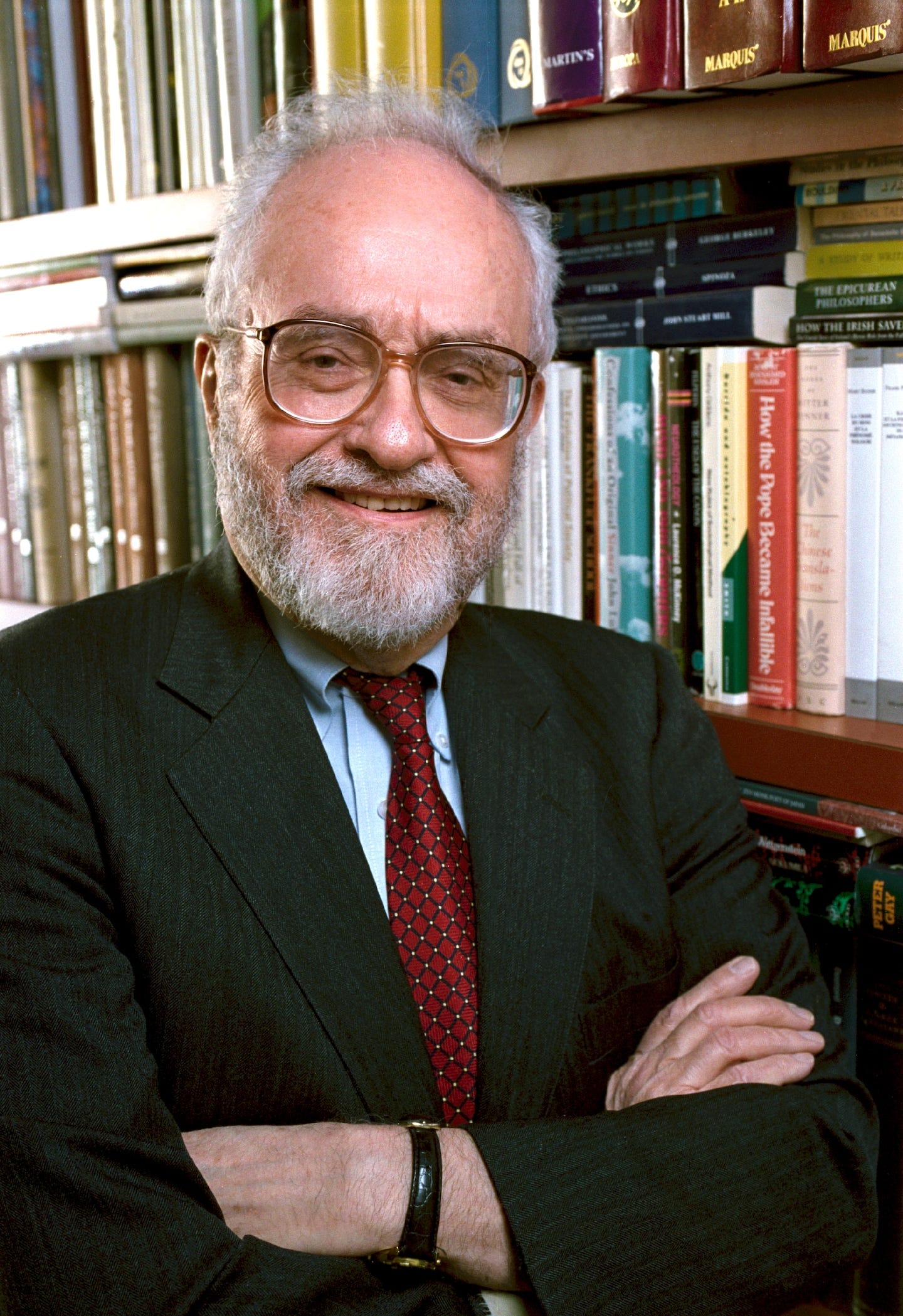
CK: I was very fortunate to meet Felix Browder, so maybe I’ll say a few words as to the circumstances of getting to know him. I was very young, 19 years old. I had left Argentina at the time of the political upheaval there, where the university had ceased to function. Some of my teachers suggested that I come to the United States, and they wrote to Alberto Calderón, who was at that time a professor at MIT and a close friend of Felix Browder.
And Calderón then communicated with Browder about me coming, and I didn’t have a degree. I never got an undergrad degree. And Browder was very kind and agreed to meet me. This was September 1973. So I went to his office, and he said, well, let’s see what you know and what you don’t know, so he gave me an impromptu exam. And he asked me lots of things; I knew some, but I mostly didn’t know them. And since I had no degree, he said the only thing we can do is have you be a student at large for one year, and then we’ll see what happens.
But he spoke with people at the admissions office, and they said that since I had no degree, I had to also take some courses that were not math. So I took the freshman sequence in humanities and the freshman sequence in social sciences and I took three math classes at the same time, and I had to work very hard.
At the end of the year, things went well, so I went for the summer to Argentina, and I received a letter from the department saying that I was admitted to graduate school as a graduate student, and they got a fellowship for me. And this was all done by Felix Browder.
And through the years, I had interactions with him. After my post-doc at Princeton, I went as a tenure-track faculty to the University of Minnesota. And I was there as an assistant professor. And after a year, I was promoted to associate professor and then to professor. And then around ‘84, Browder approached me to see if I would be interested in Chicago. I said yes, I would be interested. Eventually, the department made me an offer. I accepted. In the fall of ‘85, I came to Chicago.
At that point, Felix had resigned as chair of the department and moved to Rutgers. And after that, I saw him a few times, once at Rutgers, when there was a conference in his honor, and I was very happy to see him.
But when I was at Chicago as a student, I was close to Bob Fefferman, who was a junior faculty and I was a graduate student, and we were working in very close fields. And he was very close to Felix and his family, so I got to know both Browder boys. I got to know Bill and his older brother, who’s now an astronomer in Hawaii.
MM: You said you came to the US when you were 19. Were you always interested in math? Can you reflect on your interest at a young age?
CK: Yes. So I first became really interested in math when I was 12. This was my first year of high school. You know, the educational system is different in Argentina, there’s no middle school. You go from elementary school to high school.
In my first math class in high school, I had an excellent teacher. He had a Ph.D. in math, he was from Chile, and the class consisted of Euclidean geometry and he taught us to prove things. So the class was about proofs, facts about triangles. And then I realized that my mind worked the same way as mathematical proofs. So from that point on, I got very interested.
But when I finished high school, my family and my math teachers all told me, you shouldn’t get into math because you will starve. The jobs in math were very ill-paid in Argentina. It was very difficult to have a career at that point in math in Argentina. So I started studying engineering at the University of Buenos Aires. But at the same time, I also studied math. And after the first semester, I was completely disgusted with engineering because it wasn’t rigorous. So I stopped engineering after my first semester; the second semester, I just continued in math; and then I had the third semester. And then after that, I came to Chicago.
MM: I want to hear about your experience at Chicago. You took classes with Alberto Calderón and Antoni Zygmund. Can you reflect on your experience with that? And more broadly, it is known as the Chicago School of Analysis. For someone who is not familiar, what was that?
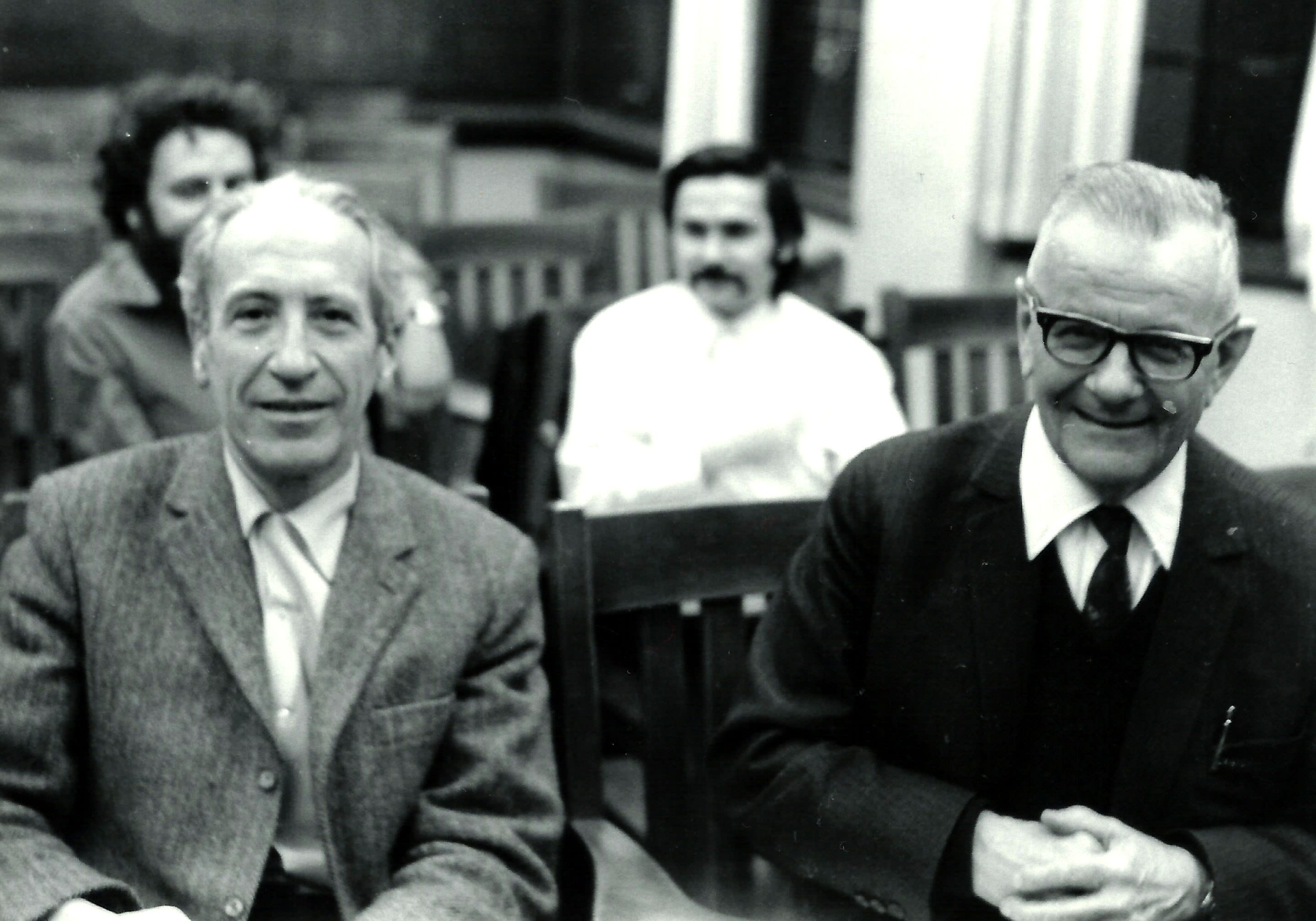
CK: When I first met Zygmund, he was 73 years old — almost my age now! And in my first year, I took a measure and integration course from him. He wrote — at that point it wasn’t even a book — it was lecture notes that eventually became a book, and I enjoyed it very much. And he was very kind to me.
And when Calderón came back to Chicago the following year from MIT, I took a class from him on some recent work of his in harmonic analysis. And then I became interested, so I started going to what was then called the Zygmund Seminar. It was once a week at 3:45, which is the time that we’re keeping to this day. There were two seminars: one was expository and the other was research. And of course, at the beginning, I didn’t understand anything. But slowly I began to understand.
Let me say a few things about the Calderón–Zygmund School. So Zygmund was one of the premier analysts in the first half of the 20th century. He worked mostly on trigonometric series, Fourier series, and real analysis, but only in one variable, so his aim was to try to find the theory in higher dimensions.
In the late 1940s, he went on a visit to Argentina. What happened is after the war, the US State Department wanted to promote scientific development in the underdeveloped world. They sent Zygmund to Argentina, where he met Calderón. He was his teaching assistant in a class he taught. And Zygmund was of course extremely impressed with Calderón, so he arranged for him to come here to do his dissertation.
Calderón was an engineer before this. He was an amateur mathematician because his father was dead set against it. But he came to Chicago and after 2 years, he finished his PhD, which consisted of 3 new research articles that opened the way to analysis in higher dimensions. That’s how the Calderón–Zygmund collaboration developed. They wrote many papers together and opened up a whole new school of mathematics. It’s been influential for many years.
MM: Can you reflect on the Honors Analysis course that UChicago Math has become famous for?
CK: Yeah, that is the creation of Paul Sally, who was one of the young faculty members when he first came to Chicago in the mid-70s. Eventually, towards the end of my studies, he became the chair of the department. And he was somebody larger than life, he was a real character; the students loved him and feared him.
And he developed this class, which is called Honors Analysis, which was to attract the top undergraduates and teach them really high-level math and very advanced things. And, in fact, my next-to-last year as a graduate student, I was the teaching assistant for that class, which I enjoyed very much. Jerry Bona was the teacher, he was a young faculty member. And I remember one time when I got stuck on homework problems that we had assigned, I had to ask for his help and he was extremely amused about it.
MM: Can you reflect a bit on what does mathematical research involve? You have made so many tremendous contributions, oftentimes in collaboration. What is the collaborative process like? Do you remember any of the moments where you had an epiphany, and what does that moment look like?
CK: So after my post-doc at Princeton, there I had my first really serious collaboration with David Jerison, who is still my collaborator now. We just published a paper together, and he’s exactly my age. And I enjoyed that very much. I was an instructor, he was a graduate student, because he had taken 2 years off to go to Paris to learn math there. Anyway, so we worked very hard together, and we got some success.
But when I went to Minnesota, I collaborated with, and was sort of mentored by, Gene Fabes, who was a former student of Zygmund’s at Chicago. And he was a sweet person. And in his work, he always worked with others. He was a very sociable person, and he enjoyed the process of discussing with somebody else. And I learned this from him and I’ve done it ever since.
When you’re in math as a researcher, you have to go really deep into the subject and spend many hours thinking and working. But if you’re doing it with somebody else, then you have a social outlet for your work, and that is a very nice situation. And the other thing is that in conversation with somebody else, you sometimes generate ideas that you didn’t know you had, and they come out. And you don’t know how they came out, but they come out. And that’s part of the pleasure of the collaboration.
I have had moments of inspiration, yes, and it comes as a flash. It’s not a conscious thing. I’m wondering about something, and then suddenly I don’t know from where some idea comes. When I was younger, it used to happen during the night, or sometimes first thing in the morning in the shower. Now I’m too tired, and so it comes later on.
I remember one of my collaborators and co-authors was in Spain, and we were working with a friend, Gustavo Ponce — this collaboration started in 1987 — and we had been discussing with Gustavo, and Gustavo had to go back home. And Luis and I started discussing, and then suddenly, I don’t know how or why, I had this vision of how to do it. And then I could see the whole problem, and it was really extremely satisfying. One moment you’re stuck, and then the next minute I saw the path.
MM: You mentioned these social interactions and collaborations. You were president of the International Math Union and vice president of the AMS before that. Could you explain what your role was? And you were chair of the Fields Medal Committee, so what was your role there?
CK: The role of vice president of the American Math Society is basically you attend meetings of the Council of the American Math Society, and you give your opinion on the matters that are discussed.
Being president of the International Math Union is a job of tremendous responsibility. It’s supposed to steer the development of math interaction all over the world in both research and education. And, of course the decisions get voted on, but you are the generator of the initial proposals.
So, during my period as president of the IMU, there were two very cataclysmic events. The first one was COVID. The IMU is built to generate the interaction of mathematicians from different countries. COVID was the anti-IMU. On the other hand, we were very lucky that Zoom was developed, and there was a possibility for online interaction. So that saved the day. It meant that we could do many, not all, but many of the activities that we had planned.
But when finally COVID more or less was resolved, we had the centenary of the IMU. So there was a celebration in France at Strasbourg, which was the place where the IMU had first been founded, and we had a meeting to celebrate this. People came from various countries, and the meeting was finally held in 2021.
It should have been held in 2020, but we had to postpone it due to COVID. And people were so happy that we were finally able to meet together and discuss, make math presentations and talks. We had the idea of having 15-minute talks on various different topics. It was a great success, and everybody was just extremely happy.
The next cataclysmic event was the Russian invasion of Ukraine. Because this happened in 2022, and the International Congress of Mathematicians (ICM) was due to be held in St. Petersburg in the summer. So we had to decide what to do on the spot.
I had contemplated beforehand what we would do in this case, because I had a feeling it was going to happen. So I discussed the plan with the Secretary General of the IMU at 4 in the morning our time. We had a virtual meeting with the Executive Committee. Then we had the meeting, and one of the members of the Executive Committee was Russian. And he was a good friend of mine. And he was beside himself, so it was a very difficult meeting.
So I presented the plan, the Executive Committee approved it, we immediately wrote a statement from the Executive Committee, and then we were confronted with the fact that all the money for the meeting came from Russia. So we didn’t have access to it. And second, we had to reorganize the meeting with all the speakers, and we had to hire somebody to do an electronic version of the whole thing. The Secretary General had connections with a European foundation, and he secured some funding to be able to pay for everything.
We had to personally write to all the speakers to make sure that they were on board, that they understood how it was going to work, and so on. I had to chase many of them. And in the end, we got all but one. And this one is a very famous man who has layers and layers of protection — Yann LeCun — I couldn’t get through to him, the layers of people to get to him made it impossible. But every single other person was on board, on the order of 150 people.
As chair of the Fields Medal Committee, we had to select the members of the Fields Medal Committee. It had 12 members at the time. So that involves various considerations: field, country, gender, and all the standard things. And we formed an excellent committee.
We had a seminar over the summer before the final decision in which one member of the committee would make a presentation on the work of each of the finalists. Some of the most impressive contributions. So we had a very serious methodology. And of course, we wrote to hundreds and hundreds of people, got hundreds of opinions on each one of these candidates. And after that, we narrowed it down through our own discussions. And finally, we had the seminar. And then after the seminar, we had a further discussion. And then we had the final vote.
MM: I am very curious to hear whether you are, or were ever, interested in physics — for example, the applications of functional analysis (Hilbert spaces) to quantum physics.
CK: So I am sort of in principle, as an outsider, interested, but I don’t have the technical knowledge to actually be able to do anything about that.
MM: I am very curious to hear your thoughts on how AI can accelerate or influence math research.
CK: This is a big topic right now, not just in math. In general, what would the effect of AI be? Would it even be safe?
This is a very difficult topic, from being incredibly useful to potentially dangerous for the world. In mathematics, as far as I can tell so far, it is a useful tool for some things. But what hasn’t been seen to happen, as far as I know, is for AI to create an entirely new idea. This we haven’t seen. On the other hand, there are sometimes computations that are too large for humans. So, this certainly looks like a great tool. It also looks like it could be very dangerous. So, it is something we have to watch and look at. But the genie is out of the bottle; nobody can put it back. It is there.
What I hate is what it is doing to education. It is pointless to assign homework. Not pointless to assign it, but pointless to grade it. Because all of you guys are using AI to solve the problems. And this is extremely short-sighted. Because it means you don’t learn how to reason by yourself. And the students who are doing this are hurting themselves incredibly. They will be in trouble. It is a danger to the entire education system.
MM: Are you familiar with the book Gödel, Escher, Bach? It is my favourite book.
CK: I only have a vague impression of the book. But it seemed like something very interesting and very much fun. I think the analogy between art and math is a true analogy. It is an interesting thing to uncover.
In math, I know when I find something beautiful, and when I find something ugly, I also know it. But I don’t have any kind of scheme that I can use to explain it. I would say it is more visceral to me. I don’t analyze that kind of thing. But there are certain things that attract me.
MM: I would love to hear about your personal interests or hobbies, or do you have favourite books, favourite movies?
CK: I have many. There’s not a time when I don’t read. I read a lot of books. I love the opera when it comes to music. I don’t know how to sing. I never played an instrument, but my daughters have a lot of talent. They play the flute, they play the piano. But I enjoy the arts very much.
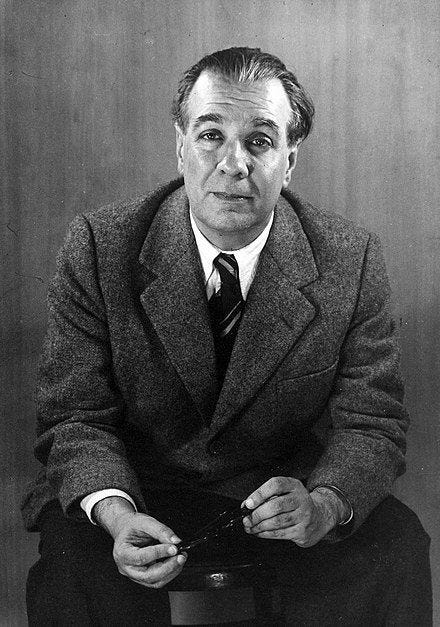
I liked, growing up, the short stories of Jorge Luis Borges. I have a personal experience with him because when I graduated from high school, I got some kind of prize for a math contest, and he handed it to me. And he and my advisor Calderón knew each other.
Nowadays, I tend to read a lot of mysteries. Right now, I’m reading a series of mysteries by a Cuban author whose last name is Padura. My friend, Gustavo, always gives me these books. He enjoys them, so he sends them to me.
When I was a kid, I read Jules Verne, Agatha Christie. Lots of books.